
In questa ricerca il corpo non è un tema separato dall’opera, né un semplice luogo di osservazione del mutamento. È il primo campo di verifica di un principio più ampio: la possibilità che la materia, attraversando una soglia di trasformazione, possa essere rimodellata senza perdere coerenza e possa anzi acquisire una nuova tensione capace di permanere.
Il tempo, in questa prospettiva, non coincide con una cronologia lineare, né con la sola misura del decadimento. Agisce come forza interna di ridefinizione. Nei passaggi fisici, biologici e strutturali, la materia modifica il proprio equilibrio, entra in uno stato di instabilità fertile e si rende disponibile a una nuova organizzazione. È in questa condizione di transizione che il rimodellamento diventa possibile.
Da qui nasce l’idea del corpo come prima matrice sensibile. Non come immagine da preservare, ma come architettura vivente in cui verificare se una trasformazione possa produrre non una perdita, bensì una nuova configurazione della forma. Il corpo diventa così il primo dispositivo attraverso cui osservare se il tempo possa essere convertito da agente dissipativo a principio costruttivo, da fattore di cedimento a energia di riassetto.
Questo stesso principio, nella mia ricerca, si concentra nella MatriceMater, intesa non come una figura tra le altre, né come un semplice motivo compositivo, ma come codice primario dell’intero sistema. La MatriceMater è la matrice madre: il DNA generativo da cui tutte le successive manifestazioni derivano. Non è un’immagine chiusa, ma una legge interna, un nucleo morfogenetico, una grammatica originaria capace di contenere in sé propagazione, differenziazione, variazione e continuità.
In essa la forma non coincide con una configurazione definitiva, ma con un principio genetico attivo. Per questo la sua identità non risiede nella fissità, bensì nella capacità di mantenere la propria legge interna attraversando stati differenti della materia, dello spazio e del tempo.
In questo senso, Matrice in Z, De-Sideris, M-Ennesima, XnZero e le altre denominazioni non indicano opere autonome nel senso tradizionale, né semplici variazioni formali. Sono piuttosto figli morfologici della MatriceMater: filiazioni strutturali di uno stesso DNA, emersioni differenziate di una medesima intelligenza generativa. Ciò che cambia non è il codice profondo, ma il modo in cui quel codice si attiva, si propaga, entra nella materia, assume assetti diversi e produce nuovi stati della forma.
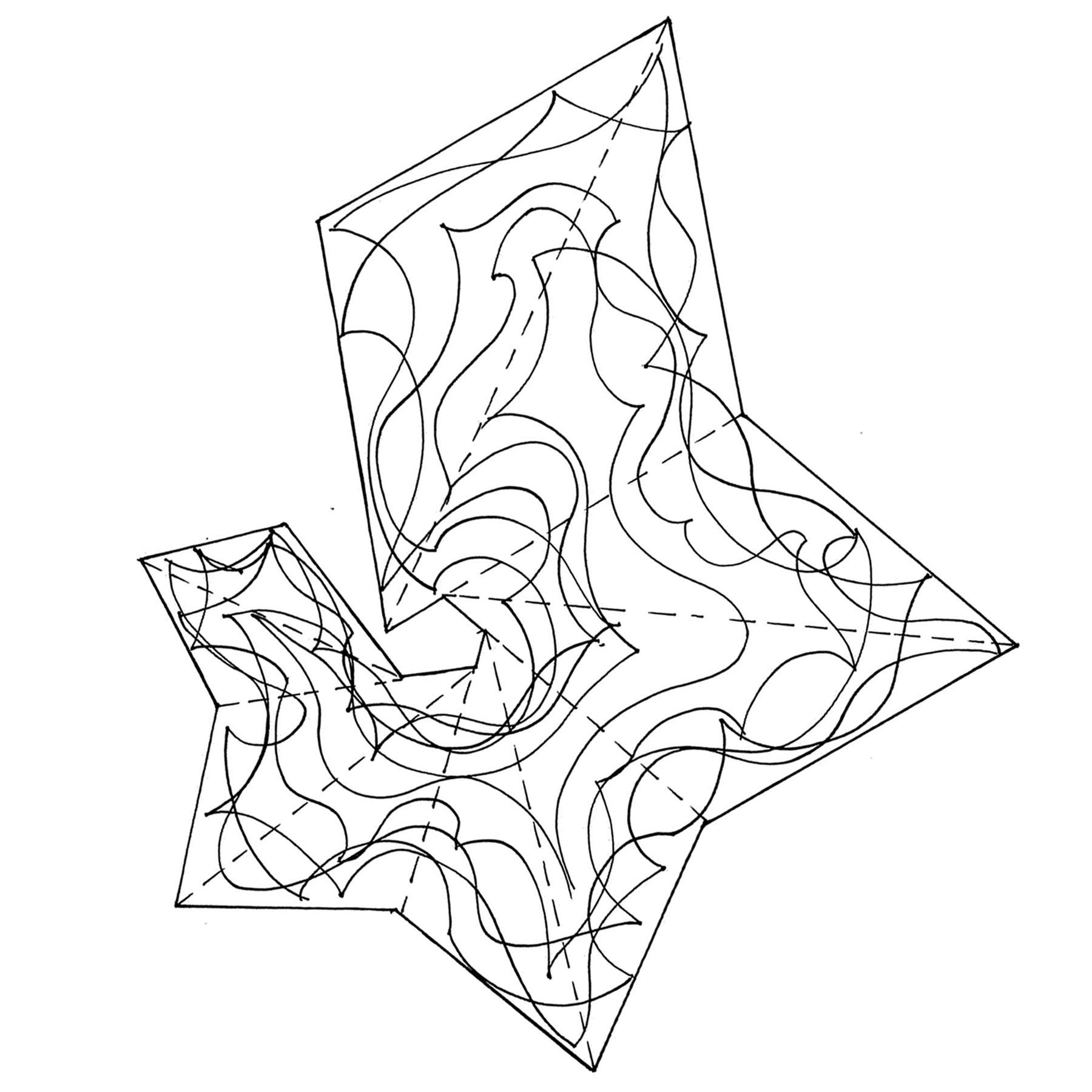
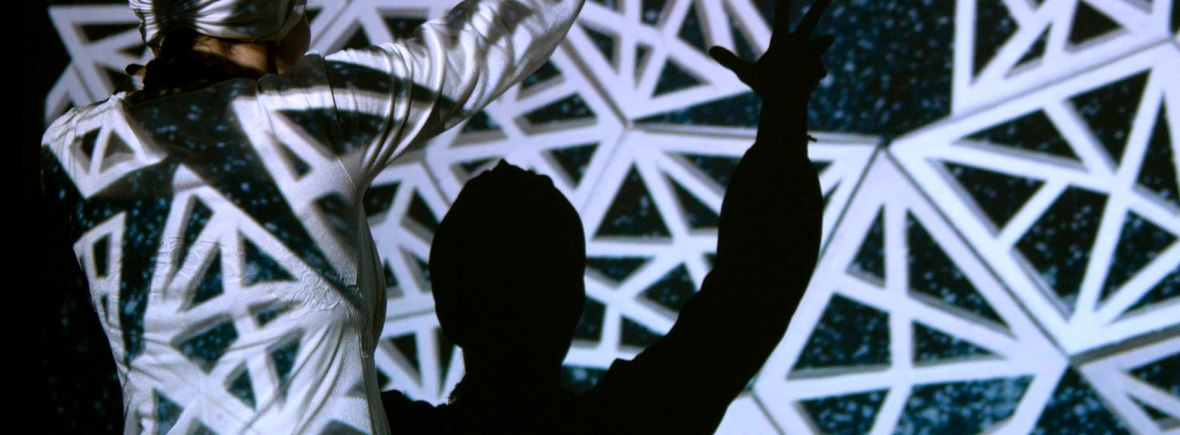
Matrice in Z, in particolare, rende visibile questa dinamica in modo radicale. La struttura passa dal segno al tracciato, dal tracciato al modulo, dal modulo al rilievo, dal rilievo all’installazione, dall’installazione al campo ambientale. Cambia scala, appoggio, orientamento, densità e regime di presenza. Attraversa parete, soffitto, terra, sospensione ed espansione. Eppure, in ciascun passaggio, non perde il proprio codice: lo riallinea, lo tende, lo trasferisce in un altro stato della materia.
È qui che la ricerca può essere letta come elaborazione di una geometria generativa. Non una geometria descrittiva, che ordina lo spazio dall’esterno, ma una geometria che produce forma attraverso trasformazione, trasmissione e filiazione. Una geometria in cui il codice non coincide con la rigidità, ma con la continuità strutturale nel mutamento.
Per questa ragione è più corretto parlare di frattalità generativa che di semplice frattale. Non si tratta di replica meccanica dell’identico, né di autosomiglianza ornamentale. Si tratta di una propagazione coerente attraverso scale differenti, di una continuità morfologica che si differenzia senza dissolversi. La Matrice non si limita a ripetersi: devia, si espande, muta configurazione, ma continua a custodire la stessa legge di formazione.
Tra corpo, MatriceMater e le sue filiazioni si stabilisce così una corrispondenza radicale. Il corpo è la prima materia in cui verificare se il tempo possa essere convertito in tensione costruttiva. La MatriceMater è il codice originario che rende tale tensione traducibile in struttura. Le sue successive emersioni — tra cui Matrice in Z — dimostrano che questo codice può attraversare differenti stati dimensionali, installativi e fisici senza ridursi a semplice variazione formale, proprio perché la sua identità non dipende dalla forma finale, ma dalla continuità del principio che la genera.
La ricerca si colloca così in un punto preciso: là dove la materia non viene pensata come residuo del tempo, ma come luogo in cui il tempo può ancora essere riorientato. Non per restaurare un’origine perduta, ma per mostrare che ogni passaggio contiene una disponibilità latente della forma e che proprio in quella disponibilità può emergere una nuova coerenza, una nuova tensione, una nuova stabilità dinamica.
In questa prospettiva, la MatriceMater si afferma come codice primario non perché rimanga immobile, ma perché continua a generare. È la madre genetica del sistema. Tutto ciò che segue non la sostituisce, non la contraddice, non se ne separa: ne costituisce la discendenza. Ogni nuova manifestazione è un figlio della sua struttura, un’altra possibilità del suo DNA, un’altra emersione della stessa intelligenza morfologica.
Da questa prospettiva, il corpo è la prima matrice sensibile, la MatriceMater è il codice originario, e le forme che da essa derivano sono la prova che un principio generativo può produrre molteplici stati della materia senza perdere identità. È qui che la forma smette di essere un esito concluso e si rivela per ciò che è: un sistema intelligente in attivazione continua, capace di riemergere, riconfigurarsi e generare nuove condizioni del reale.
MatriceMater. Primary Code, Remodelling, and Generative Geometry
In this research, the body is not treated as a theme separate from the work, nor as a mere site from which change may be observed. It is the first field in which a broader principle is tested: the possibility that matter, in crossing a threshold of transformation, may be remodelled without losing coherence and may, instead, acquire a new tension capable of enduring.
From this perspective, time does not coincide with a linear chronology, nor merely with the measure of decline. It acts as an inner force of redefinition. In physical, biological, and structural transitions, matter alters its equilibrium, enters a state of fertile instability, and becomes available to a new organisation. It is within this condition of transition that remodelling becomes possible.
From here arises the idea of the body as the first sensitive matrix: not as an image to be preserved, but as a living architecture in which to verify whether transformation may generate not loss, but a new configuration of form. The body thus becomes the first device through which to observe whether time may be converted from a dissipative agent into a constructive principle, from a factor of yielding into an energy of reconfiguration.
Within my research, this same principle is concentrated in MatriceMater, understood not as one figure among others, nor as a simple compositional motif, but as the primary code of the entire system. MatriceMater is the mother matrix: the generative DNA from which all subsequent manifestations derive. It is not a closed image, but an inner law, a morphogenetic nucleus, an originating grammar capable of containing within itself propagation, differentiation, variation, and continuity.
Here, form does not coincide with a definitive configuration, but with an active genetic principle. For this reason, its identity does not reside in fixity, but in its capacity to maintain its own inner law while traversing different states of matter, space, and time.
In this sense, Matrice in Z, De-Sideris, M-Ennesima, XnZero, and the other denominations do not indicate autonomous works in the traditional sense, nor simple formal variations. They are, rather, morphological offspring of MatriceMater: structural filiations of the same DNA, differentiated emergences of a single generative intelligence. What changes is not the deep code, but the way in which that code is activated, propagated, enters matter, assumes different configurations, and produces new states of form.
Matrice in Z, in particular, renders this dynamic visible in a radical way. The structure passes from sign to trace, from trace to module, from module to relief, from relief to installation, and from installation to an environmental field. It changes scale, support, orientation, density, and regime of presence. It traverses wall, ceiling, ground, suspension, and expansion. And yet, at each stage, it does not lose its code: it realigns it, places it under tension, and transfers it into another state of matter.
It is here that the research may be understood as the elaboration of a generative geometry. Not a descriptive geometry that orders space from the outside, but a geometry that produces form through transformation, transmission, and filiation. A geometry in which code does not coincide with rigidity, but with structural continuity through change.
For this reason, it is more accurate to speak of generative fractality than of the simple fractal. This is not a matter of mechanical replication of the identical, nor of ornamental self-similarity. It is, rather, a coherent propagation across different scales, a morphological continuity that differentiates itself without dissolving. The Matrix does not merely repeat itself: it deviates, expands, mutates in configuration, and yet continues to preserve the same law of formation.
A radical correspondence is thus established between the body, MatriceMater, and its filiations. The body is the first matter in which to verify whether time may be converted into constructive tension. MatriceMater is the originating code that renders such tension translatable into structure. Its subsequent emergences — among them Matrice in Z — demonstrate that this code can traverse different dimensional, installational, and physical states without being reduced to mere formal variation, precisely because its identity does not depend on final form, but on the continuity of the principle that generates it.
The research therefore situates itself at a precise point: where matter is not conceived as a residue of time, but as the site in which time may still be reoriented. Not in order to restore a lost origin, but to show that every passage contains a latent availability of form, and that it is precisely within this availability that a new coherence, a new tension, and a new dynamic stability may emerge.
From this perspective, MatriceMater asserts itself as a primary code not because it remains still, but because it continues to generate. It is the genetic mother of the system. Everything that follows does not replace it, contradict it, or detach itself from it: it constitutes its descent. Every new manifestation is an offspring of its structure, another possibility of its DNA, another emergence of the same morphological intelligence.
From this perspective, the body is the first sensitive matrix, MatriceMater is the originating code, and the forms that derive from it are the proof that a generative principle can produce multiple states of matter without losing identity. It is here that form ceases to be a concluded outcome and reveals itself for what it is: an intelligent system in continuous activation, capable of re-emerging, reconfiguring itself, and generating new conditions of the real.
Ritornare alla soglia del sistema / Returning to the threshold of the system : https://pamelaferri.com/
MatriceMater | Codice base / MatriceMater | Originating Code: https://pamelaferri.com/matricemater-codice-originario-e-frattale-genetico-strutturale/

