
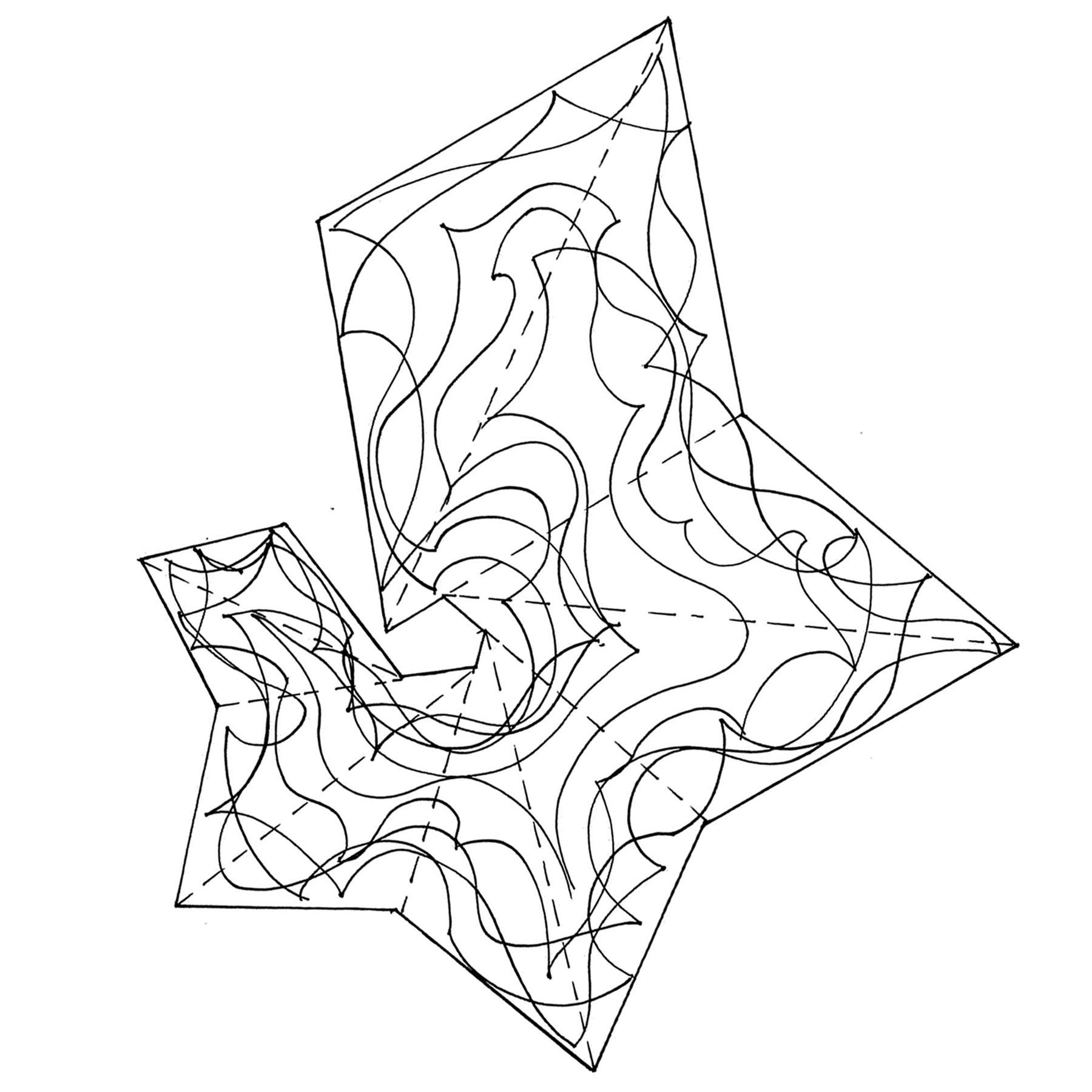
MatriceMater non è una forma tra le altre, né un semplice motivo compositivo.
È il codice originario dell’intero sistema: la matrice madre da cui si generano opere, installazioni, diramazioni e successive emersioni della ricerca.
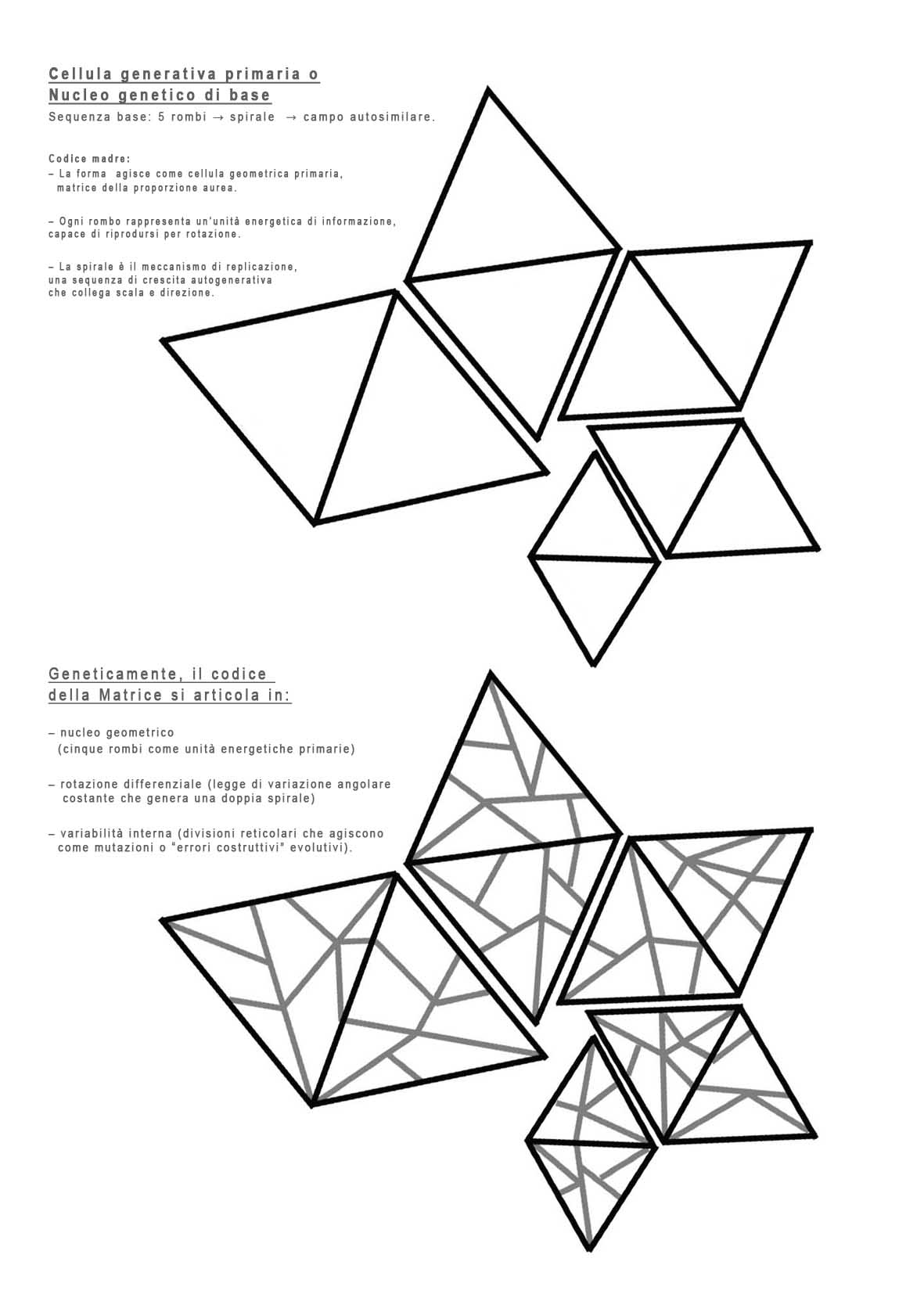
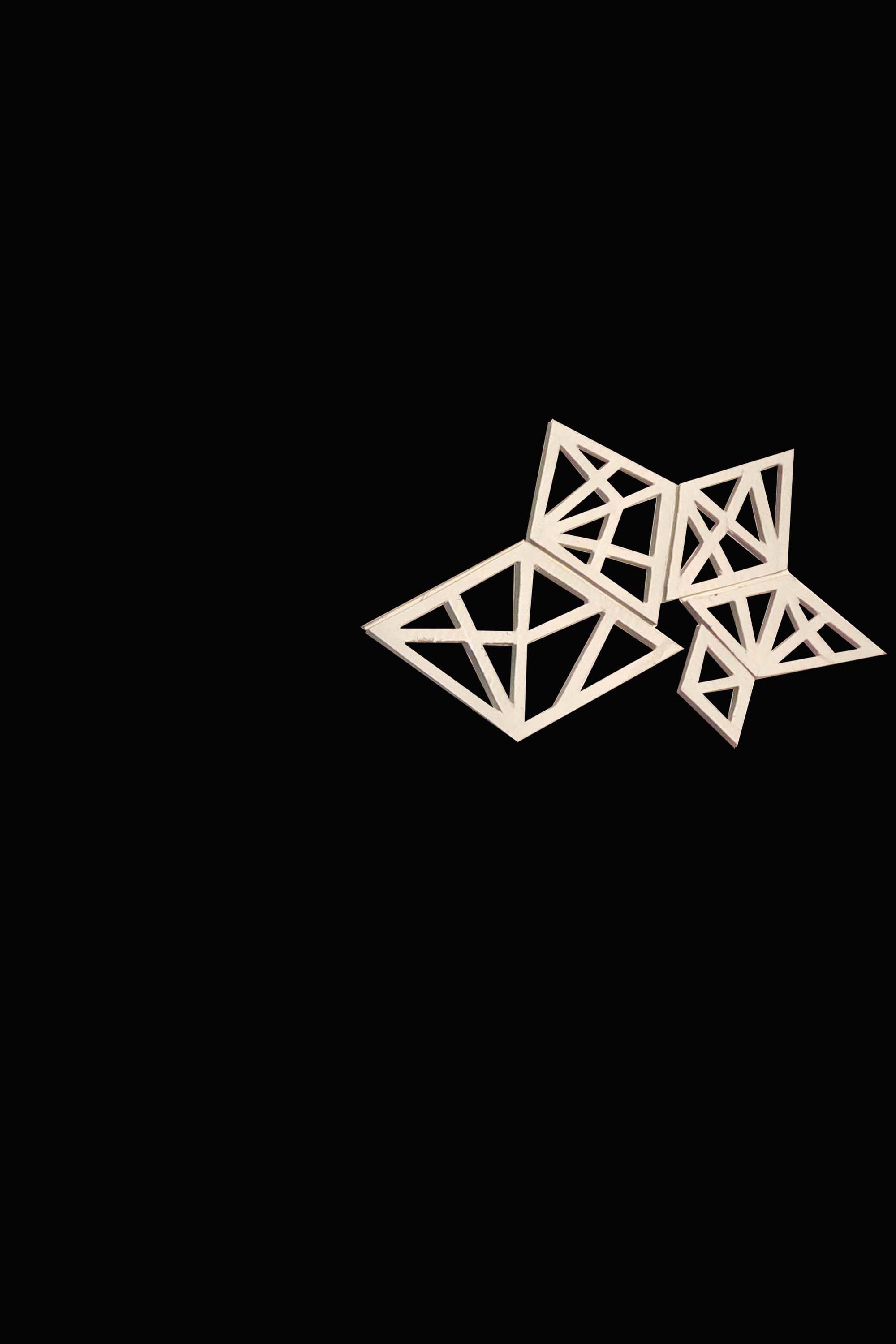
La sua origine risiede in un nucleo genetico primario composto da cinque rombi disposti in una struttura radiale asimmetrica, attraversata da una rotazione costante ma non regolare. In questo nucleo non è contenuta una figura conclusa, ma una legge. Non un’immagine da ripetere, ma una direzione interna della crescita.
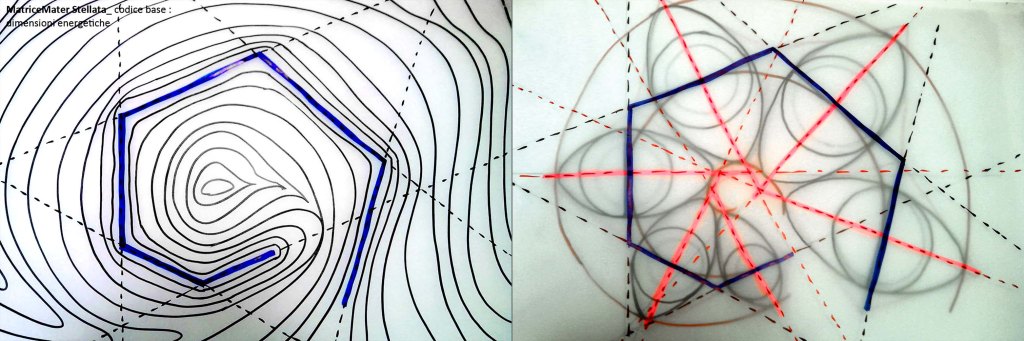
In questa direzione è già inscritta la dimensione temporale: il codice non organizza soltanto la forma, ma ne orienta il divenire. Il Tempo non interviene come misura esterna, ma come principio attivo di emersione, perché è nel suo dispiegarsi che la struttura acquisisce tensione, relazione e possibilità di spazio. La MatriceMater nasce qui: come genotipo geometrico, come cellula sorgente, come principio di organizzazione capace di custodire in sé proporzione, deviazione, tendenza e sviluppo.
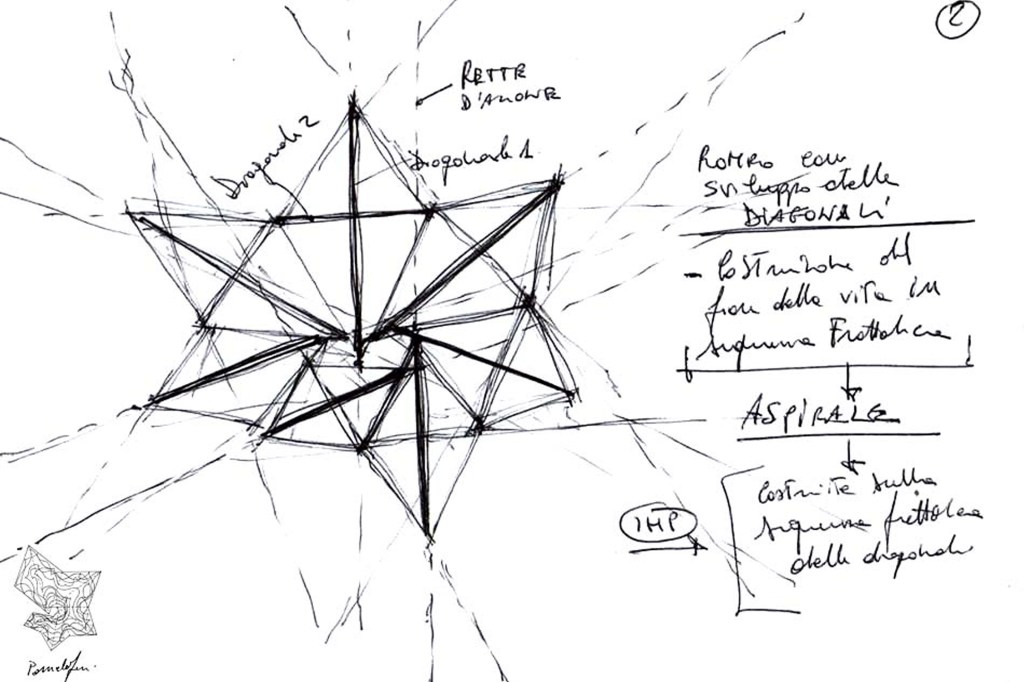
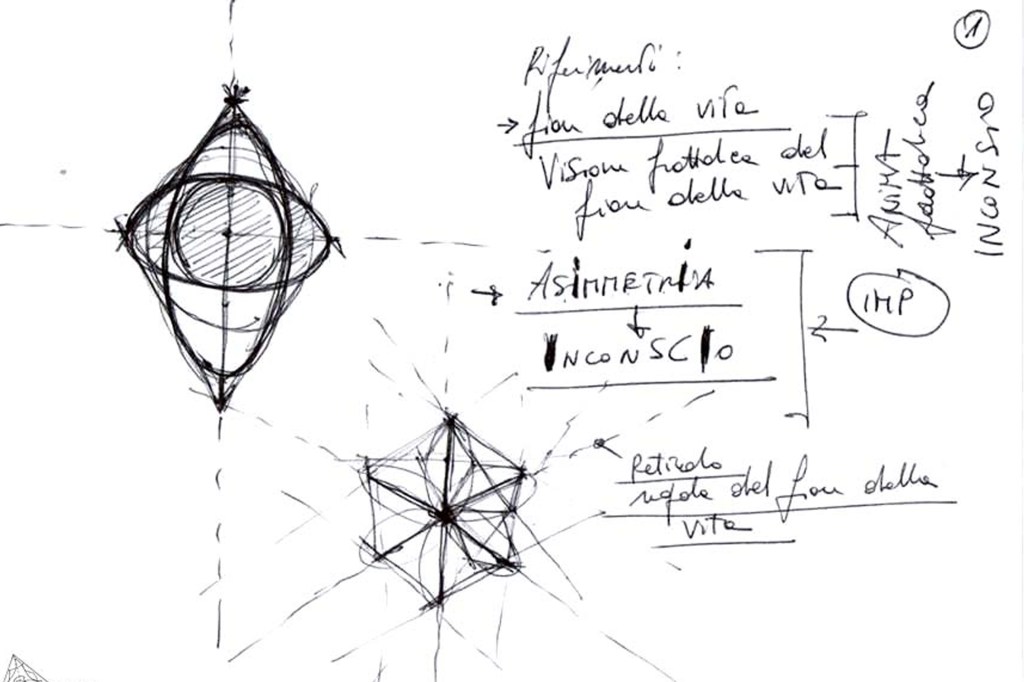
Per questo la MatriceMater non va letta come modulo, ma come organismo generativo.
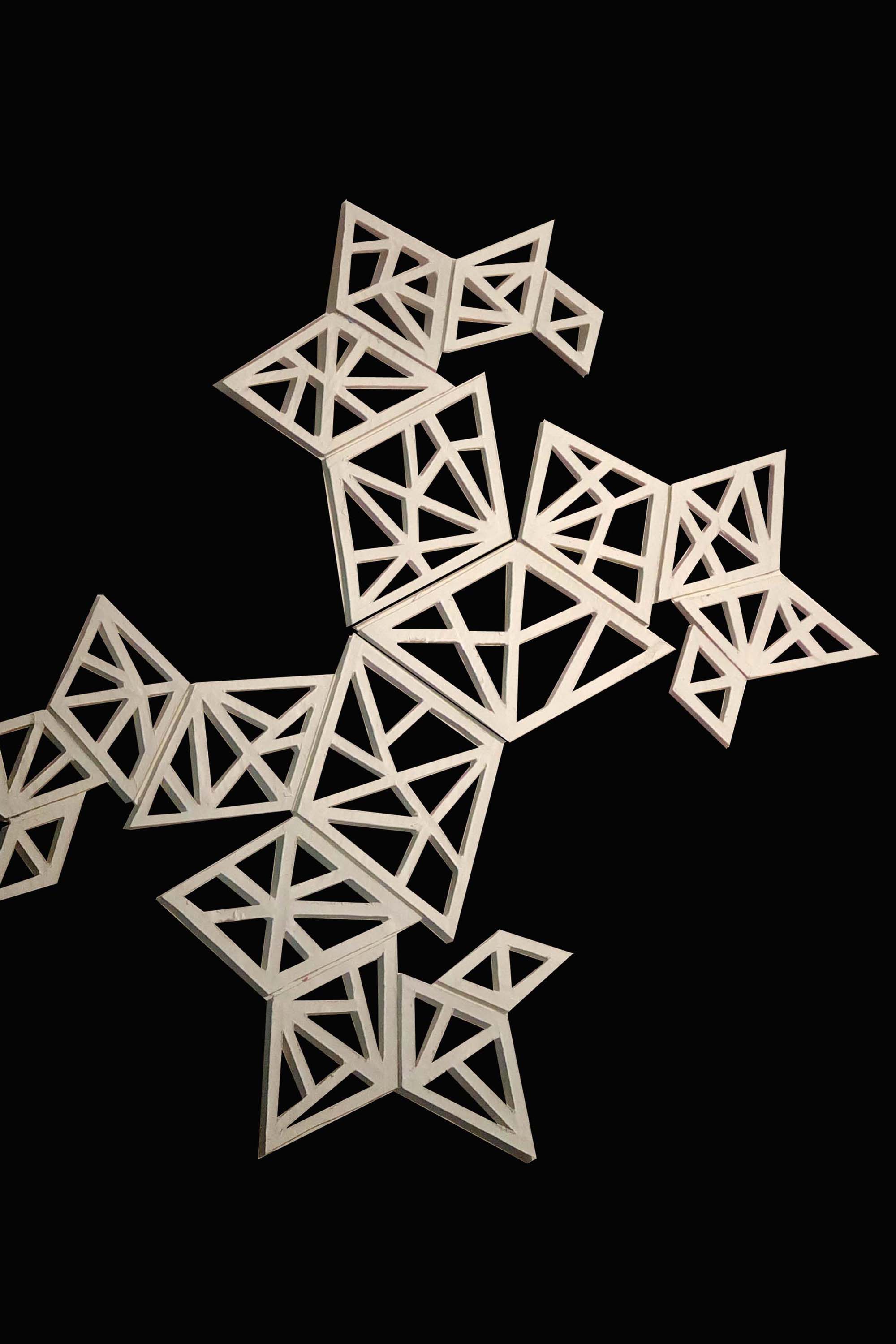
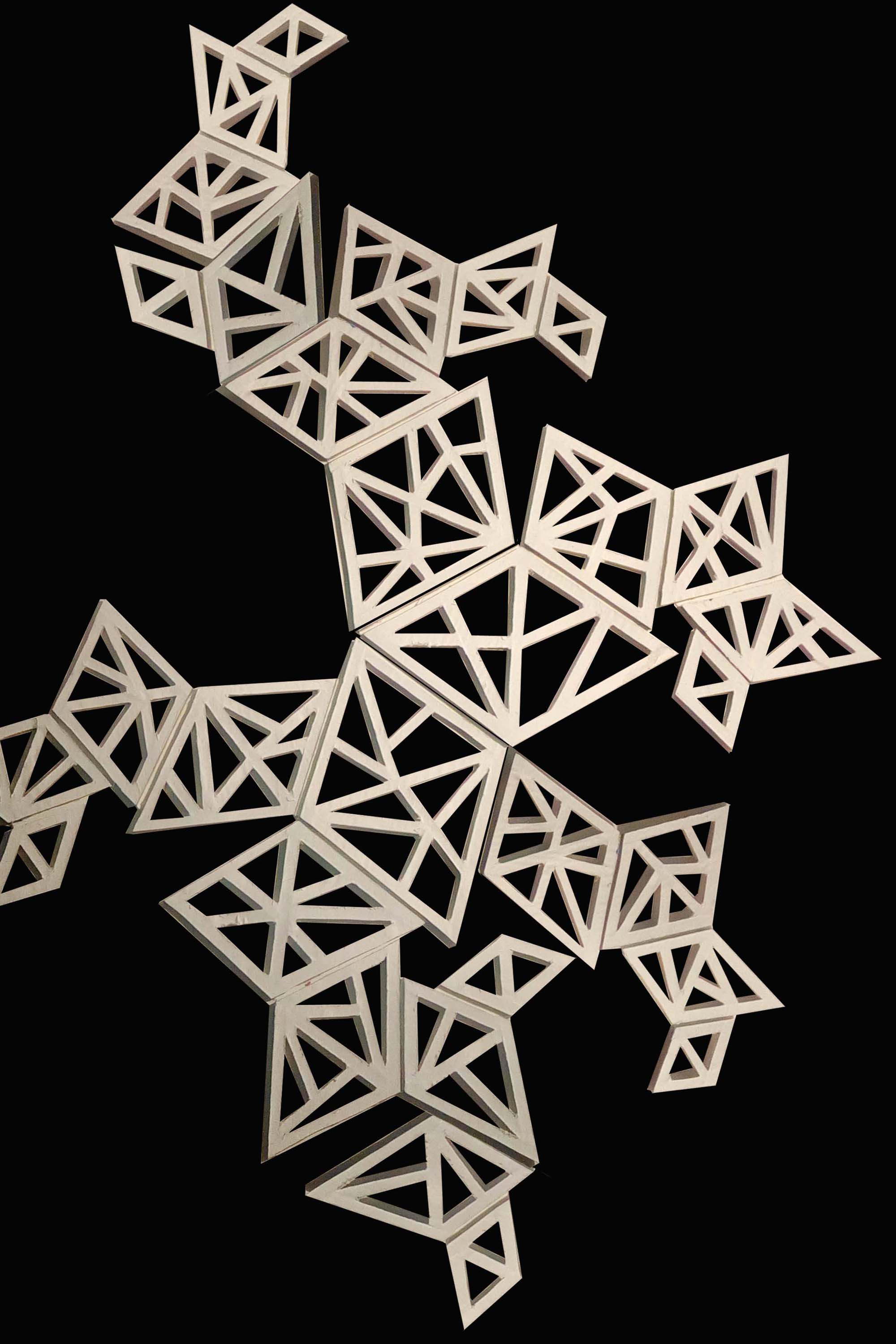
Il suo comportamento non coincide con la replica meccanica dell’identico. Ogni passaggio produce invece una continuità differenziale: la forma si riproduce senza copiarsi, si propaga senza ridursi a serialità, mantiene la propria legge mentre si trasforma. Ciò che permane non è la fissità dell’aspetto, ma la coerenza del codice.
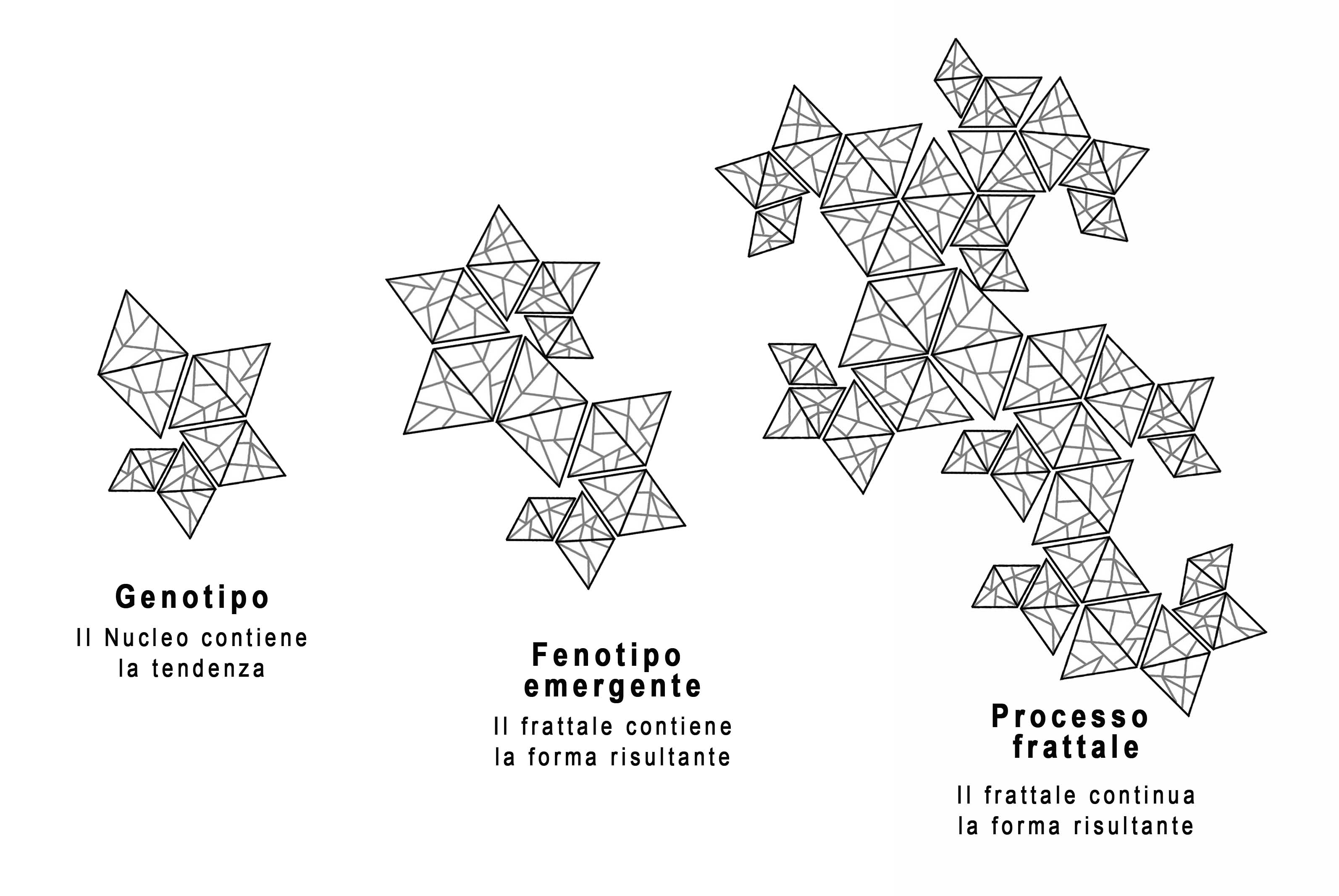
La doppia elica non appartiene all’origine come immagine già data.
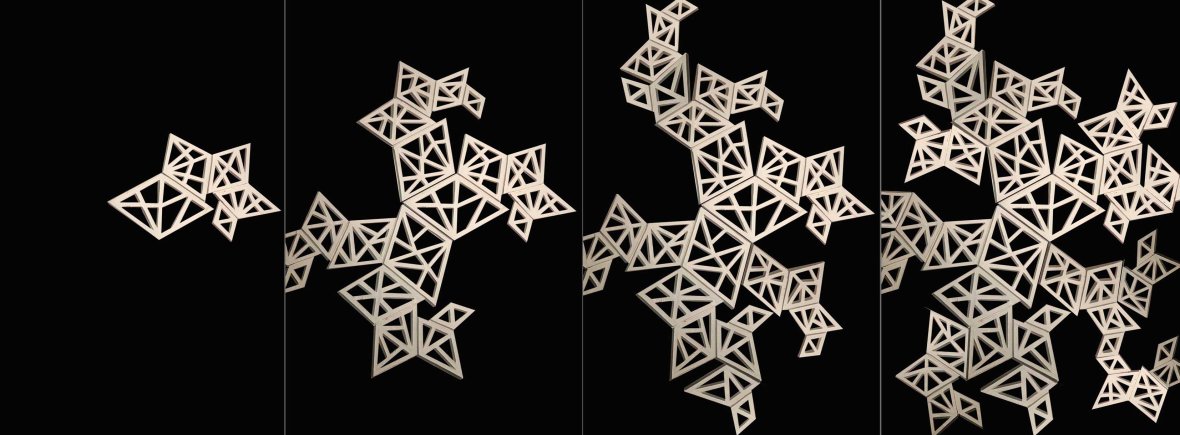
È una conseguenza del processo. Compare quando il nucleo comincia a riprodursi, quando la regola interna entra in propagazione, quando la struttura genera rombi figli, variazioni angolari, slittamenti di scala e nuove tensioni relazionali. In questo senso la MatriceMater non nasce elicoidale: diventa elicoidale. Il nucleo contiene la tendenza; la forma risultante emerge dopo.
È proprio in questo scarto tra nucleo e manifestazione che il Tempo diventa determinante. Non come semplice durata, ma come condizione generativa attraverso cui la forma attraversa passaggi, accumula differenze e costruisce spazio. In questa prospettiva, il frattale non è soltanto una logica di propagazione, ma una dinamica temporale che rende visibile la crescita del codice nel reale.
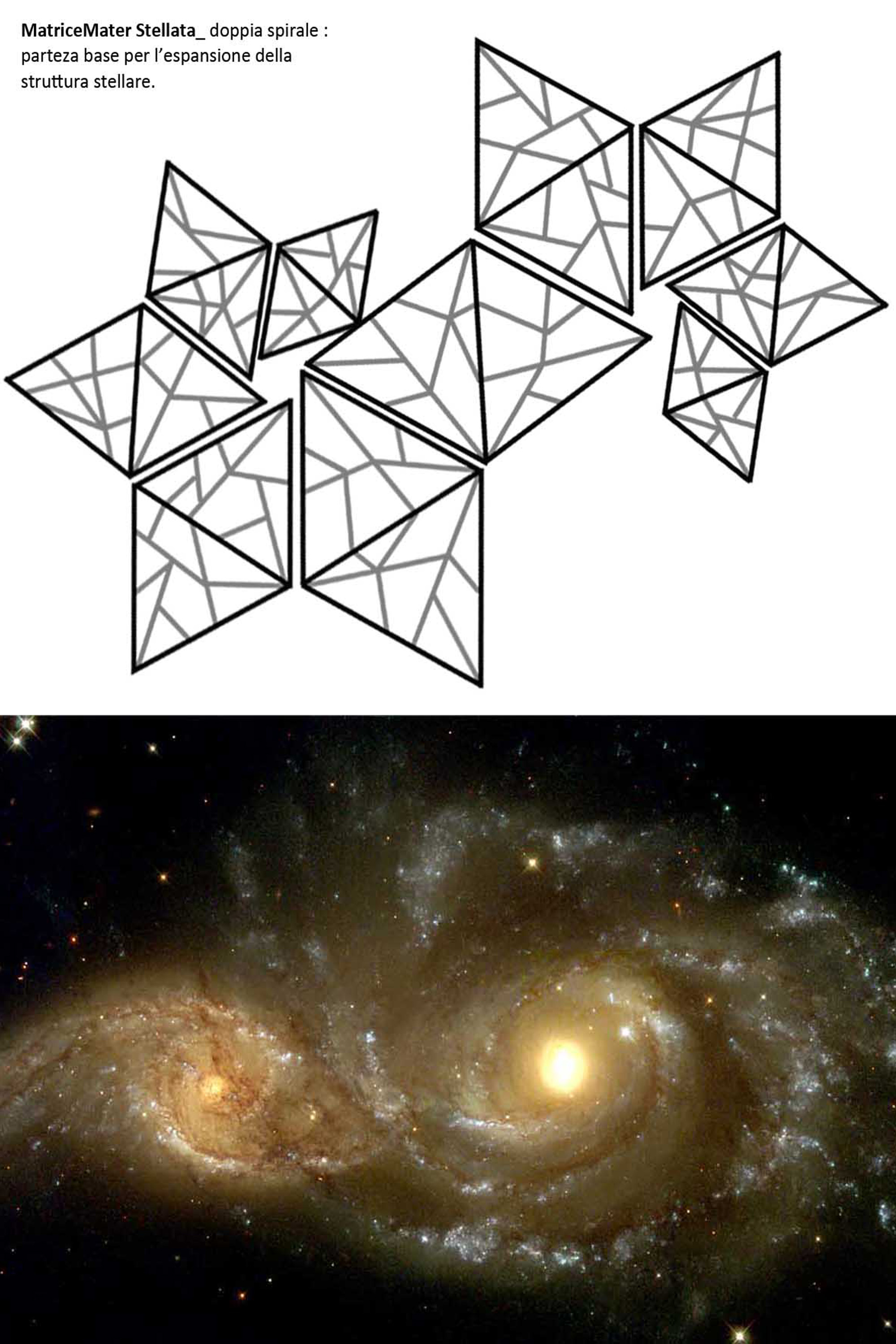
È qui che la ricerca definisce un nuovo campo frattale.
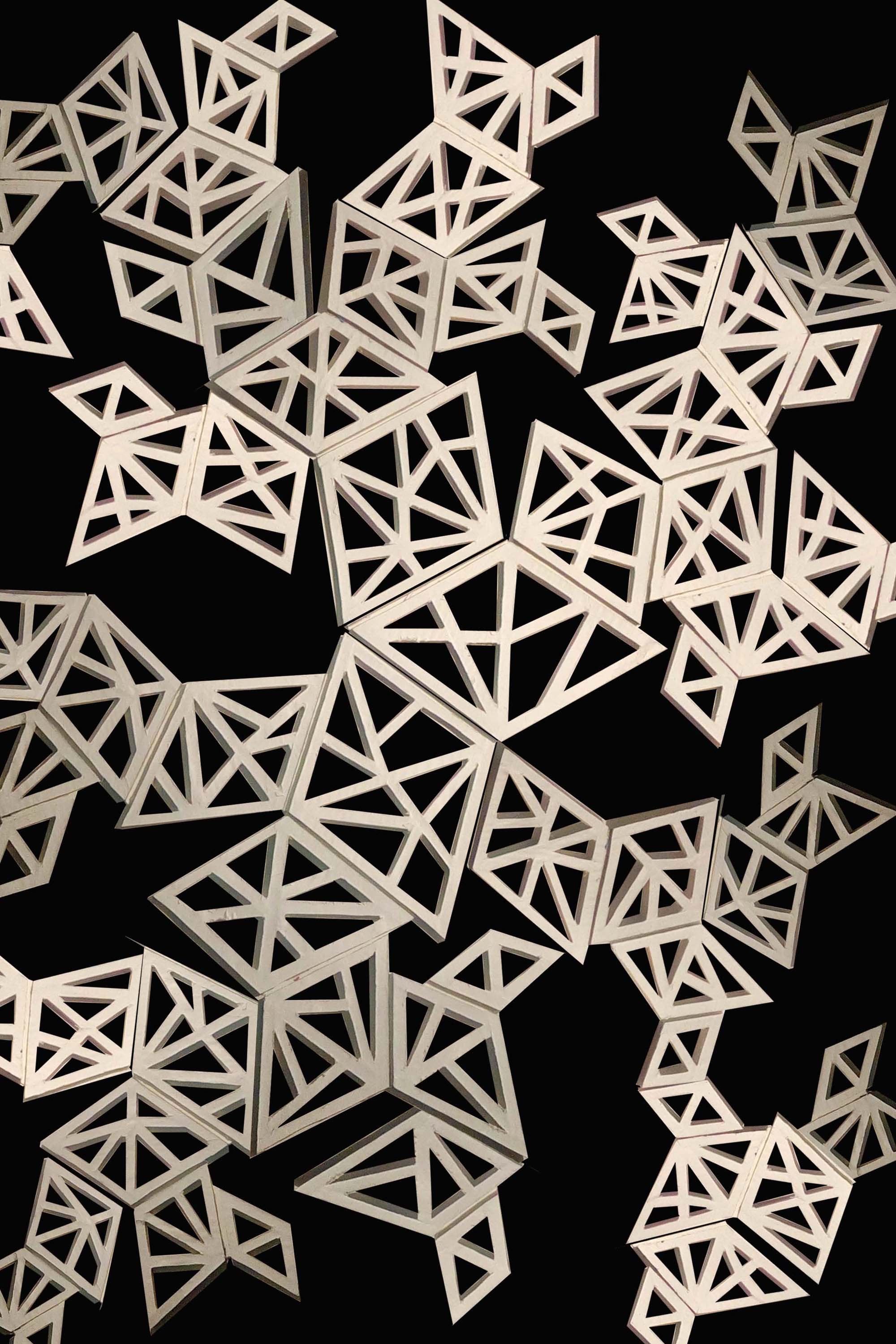
Non la frattalità deterministica classica, fondata sulla reiterazione di una regola chiusa, ma un frattale genetico-strutturale, non fondato sulla ripetizione modulare dell’identico. La sua autosimilarità non è rigida né ornamentale: è una autosimilarità imperfetta, evolutiva, vitale. Ogni generazione conserva il principio e insieme lo differenzia. Ogni sviluppo trasmette il codice, ma lo espone a mutazioni, scarti, deviazioni, addensamenti, rarefazioni.
Anche il reticolo interno non svolge una funzione decorativa.
Agisce come sistema di mutazione costruttiva. Le linee interne introducono variazioni informative, incrementano complessità, rendono la struttura più densa, più viva, più capace di generare ulteriori configurazioni. L’errore non è una caduta dell’ordine: è il suo enzima evolutivo. La forma cresce proprio perché non coincide mai perfettamente con la propria replica.
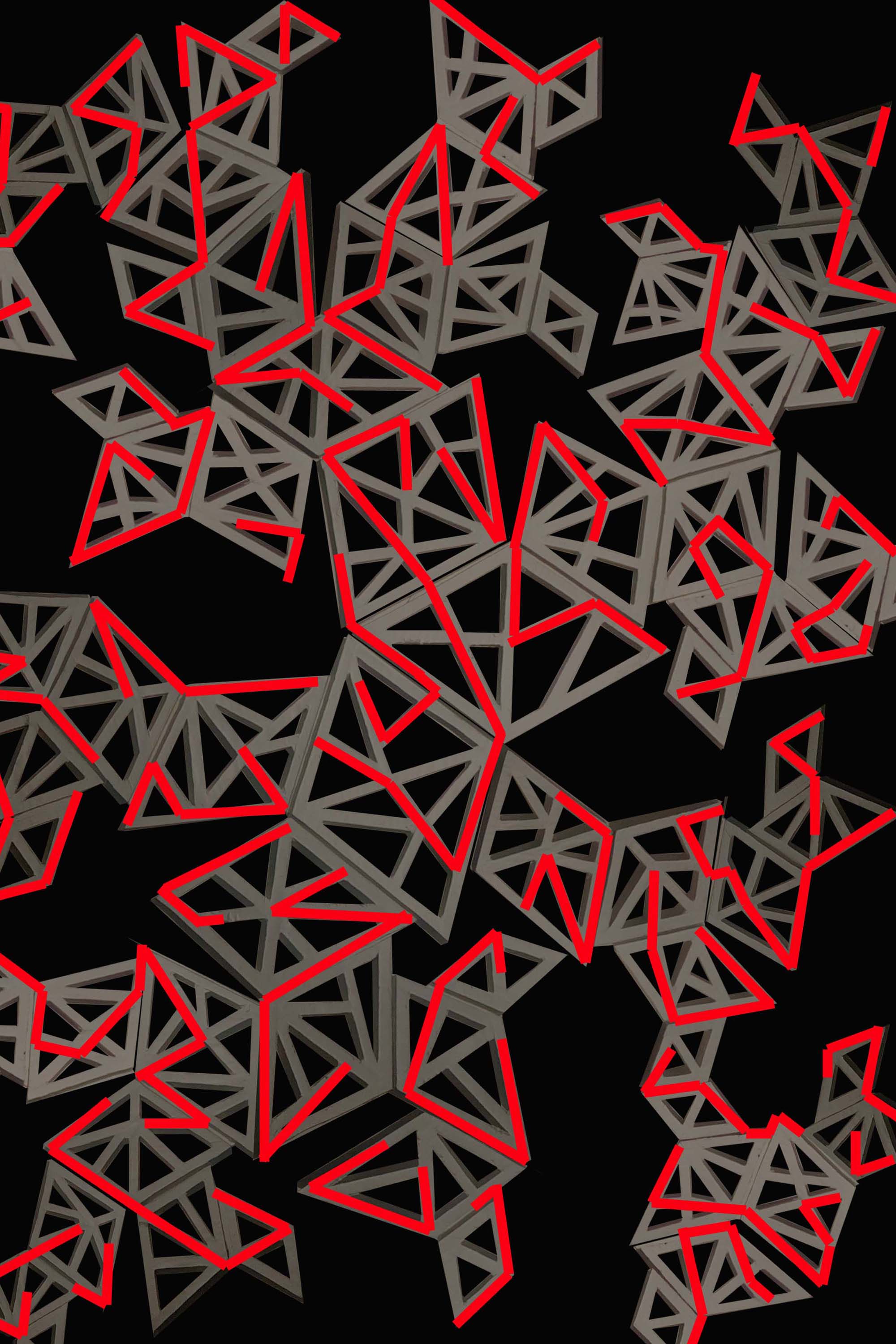
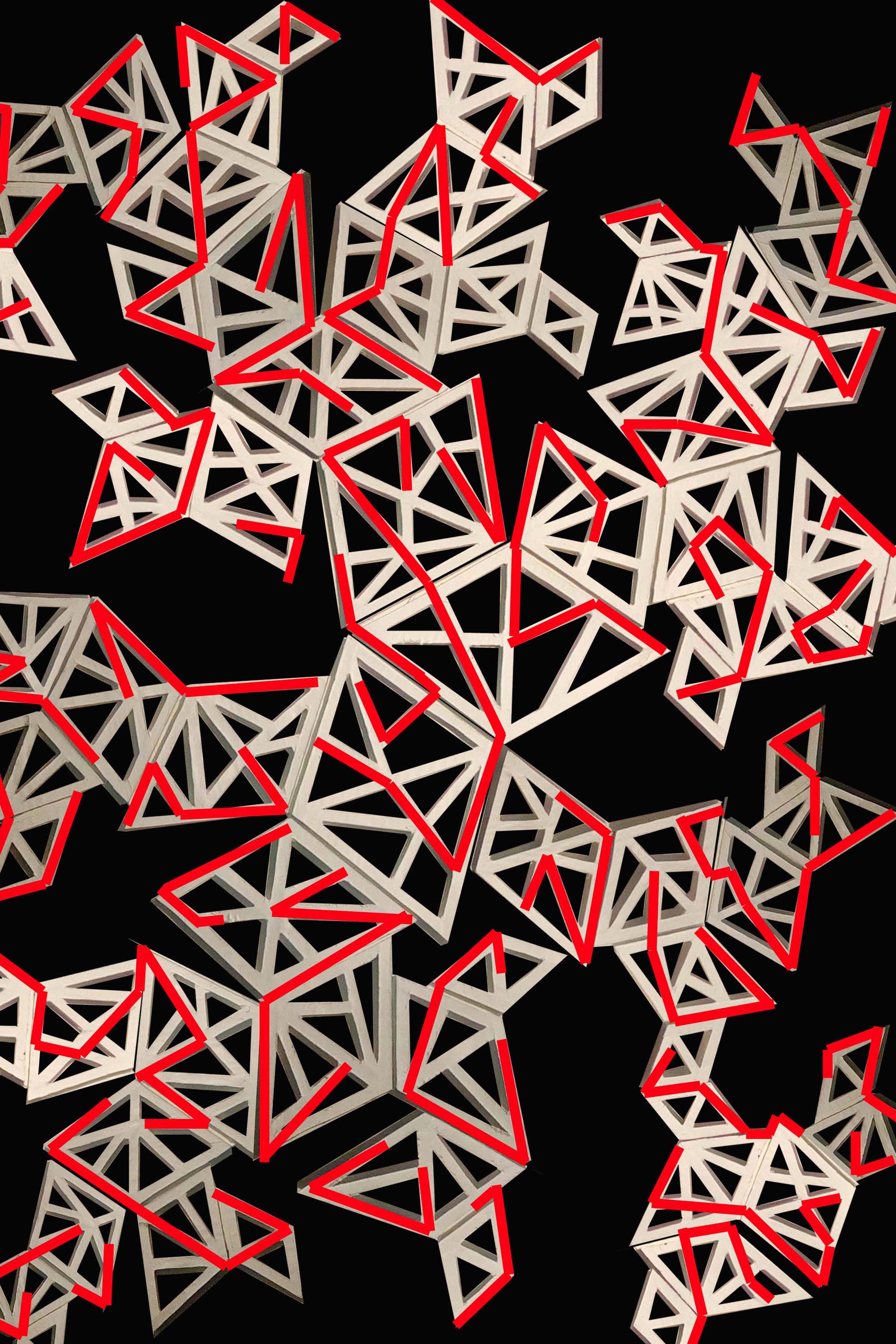
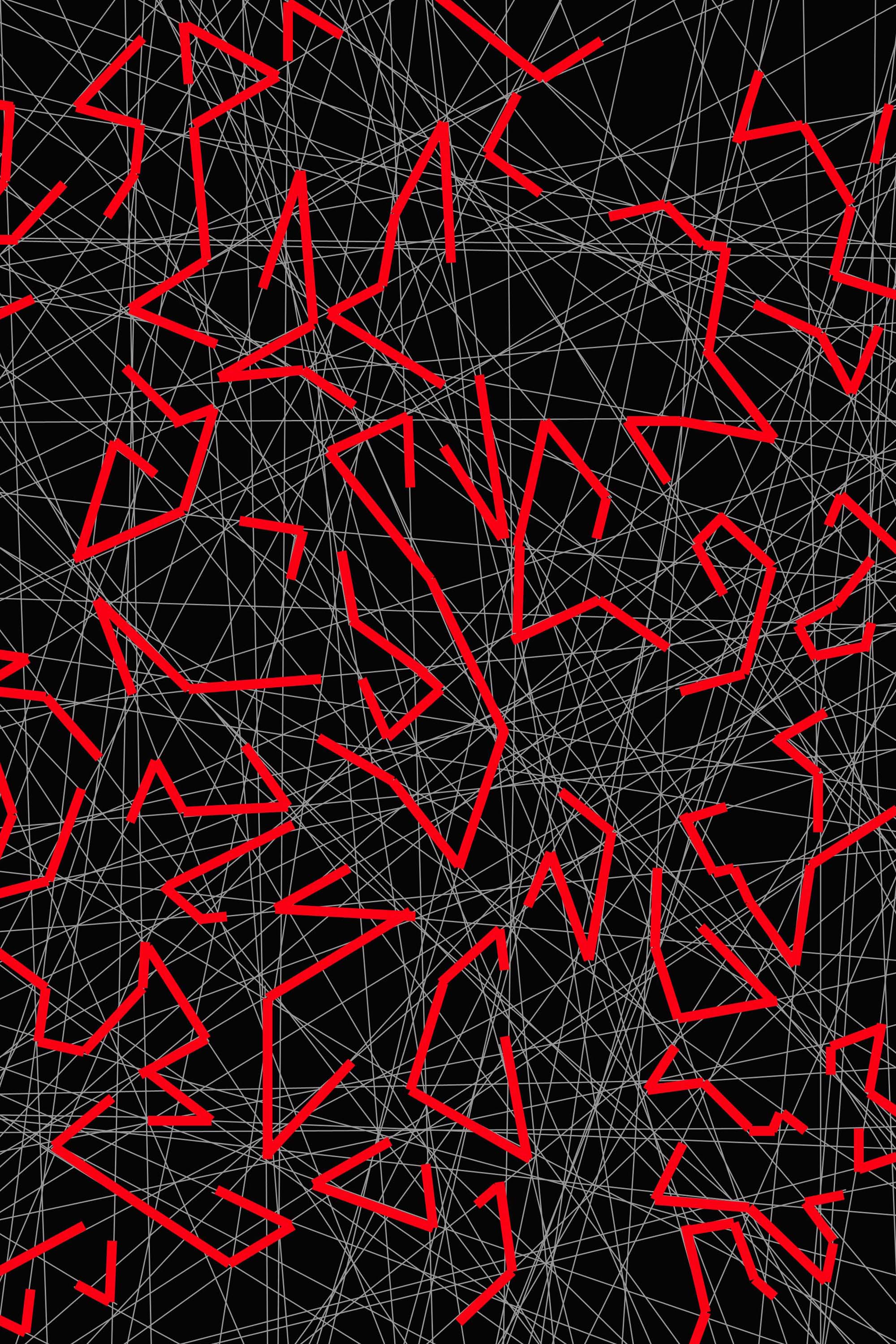
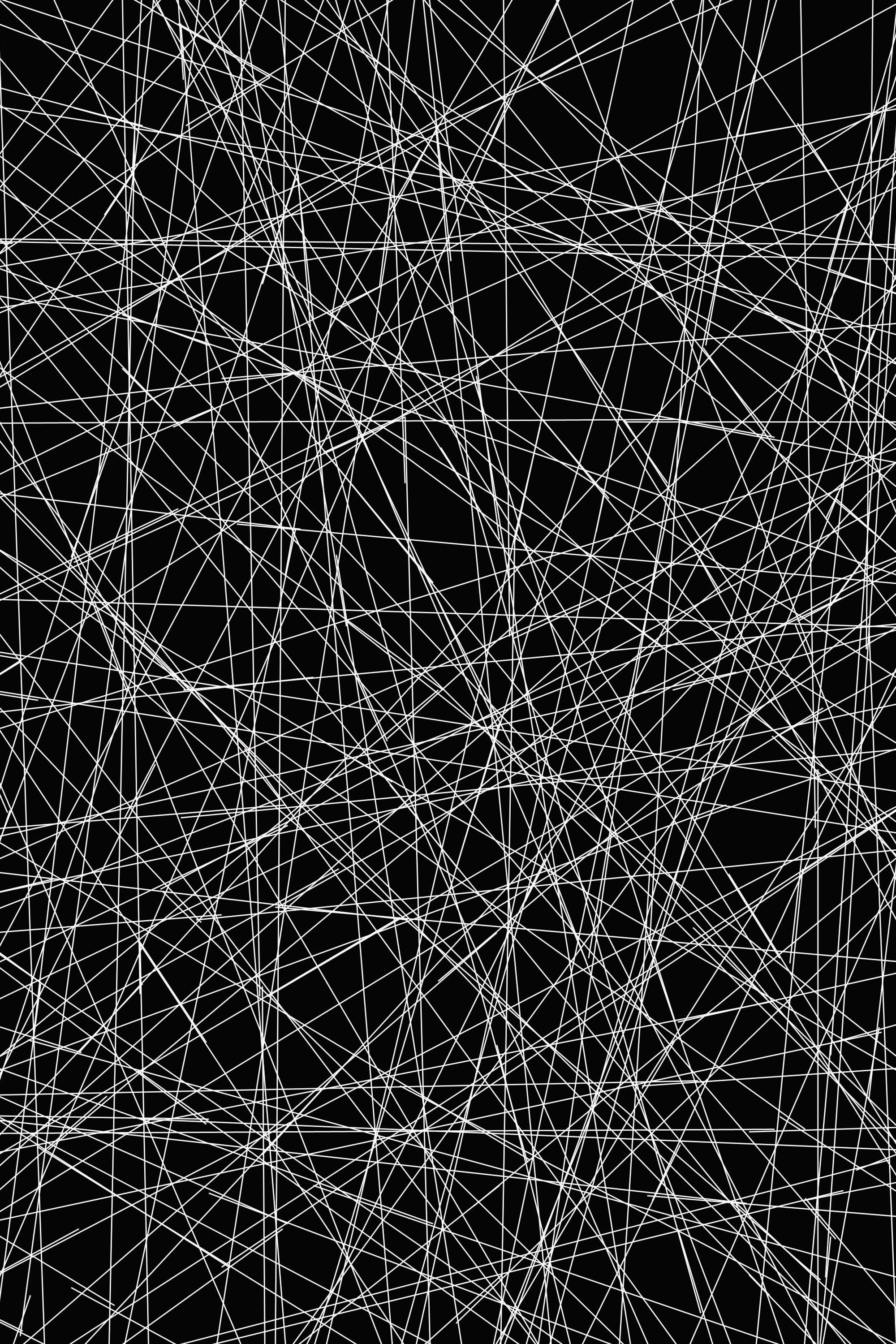
Da questa prospettiva, MatriceMater è il DNA visibile della ricerca.
Non rappresenta soltanto un’origine: la rende operativa. Tutto ciò che segue — espansioni ambientali, propagazioni installative, filiazioni morfologiche, emersioni tridimensionali — non nasce accanto ad essa, ma da essa. Le opere non costituiscono episodi separati: sono discendenze attive di uno stesso codice sorgente.
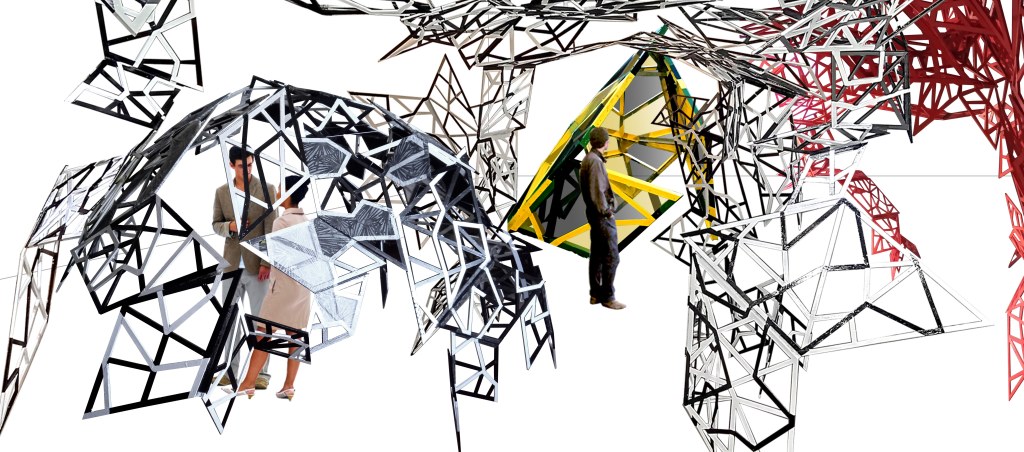
Anche il segno originario assume così un valore radicale.
Non è un semplice logo, né un emblema sovrapposto alla ricerca. È la sua condensazione primaria. Qui il segno non illustra il sistema: ne custodisce la legge generativa. Identità visiva, struttura teorica e principio morfogenetico coincidono.
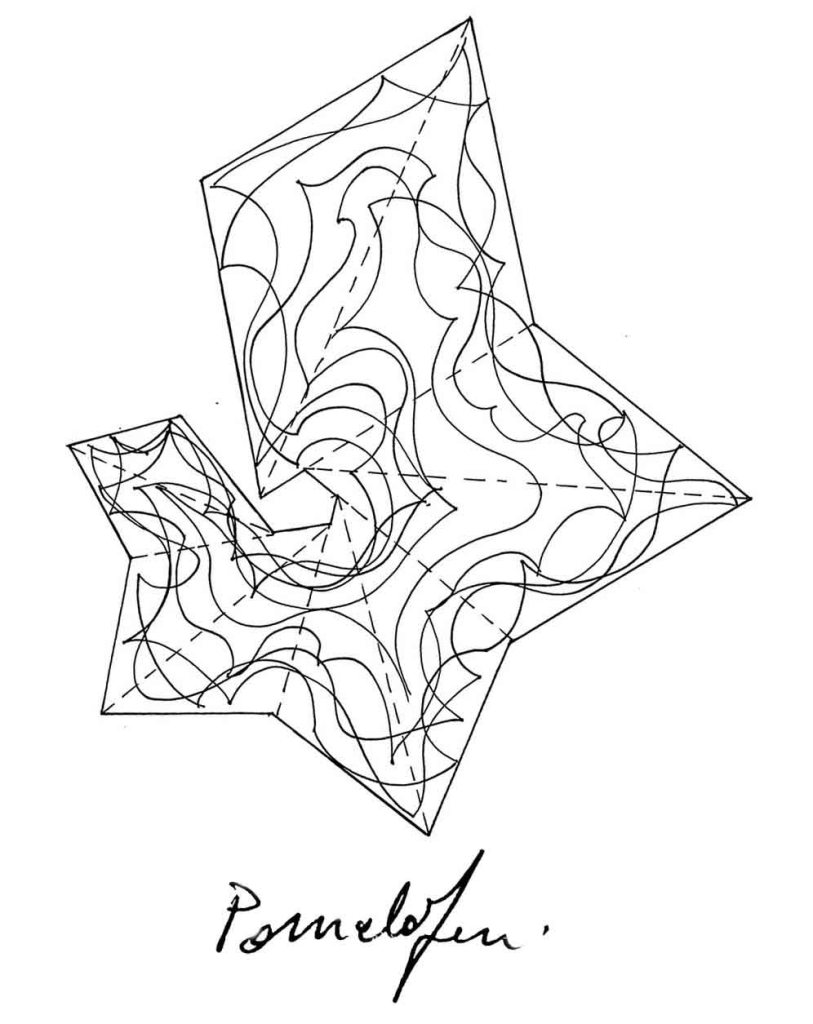
MatriceMater si afferma quindi come una soglia precisa della forma contemporanea: là dove la geometria smette di essere descrittiva e diventa genetica; là dove il frattale smette di essere schema e diventa comportamento; là dove l’origine non resta immobile, ma continua a produrre discendenza.
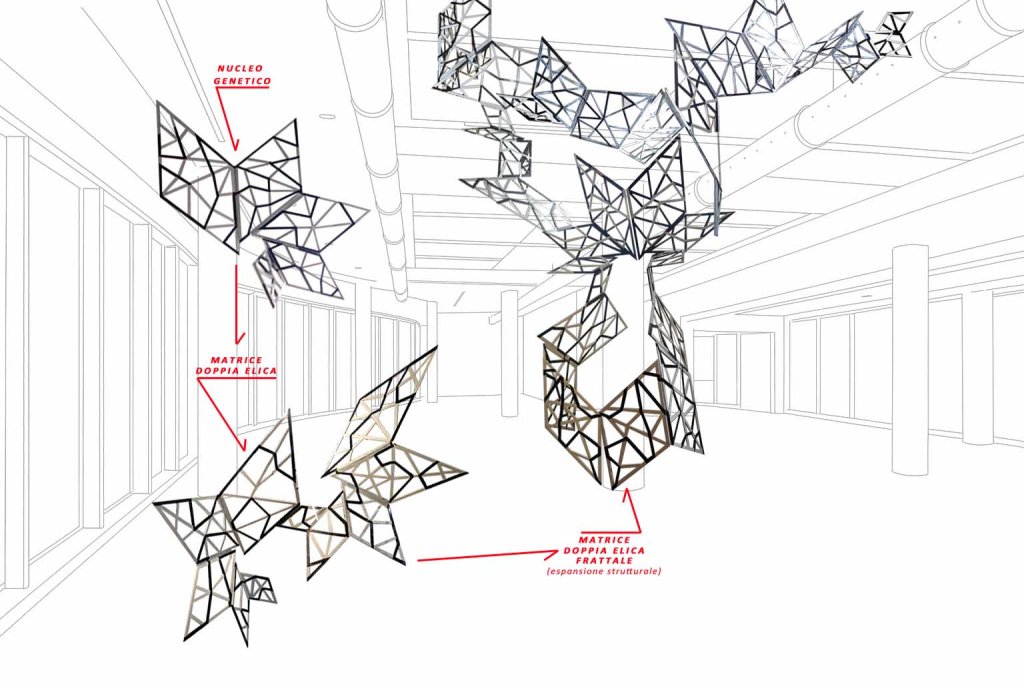
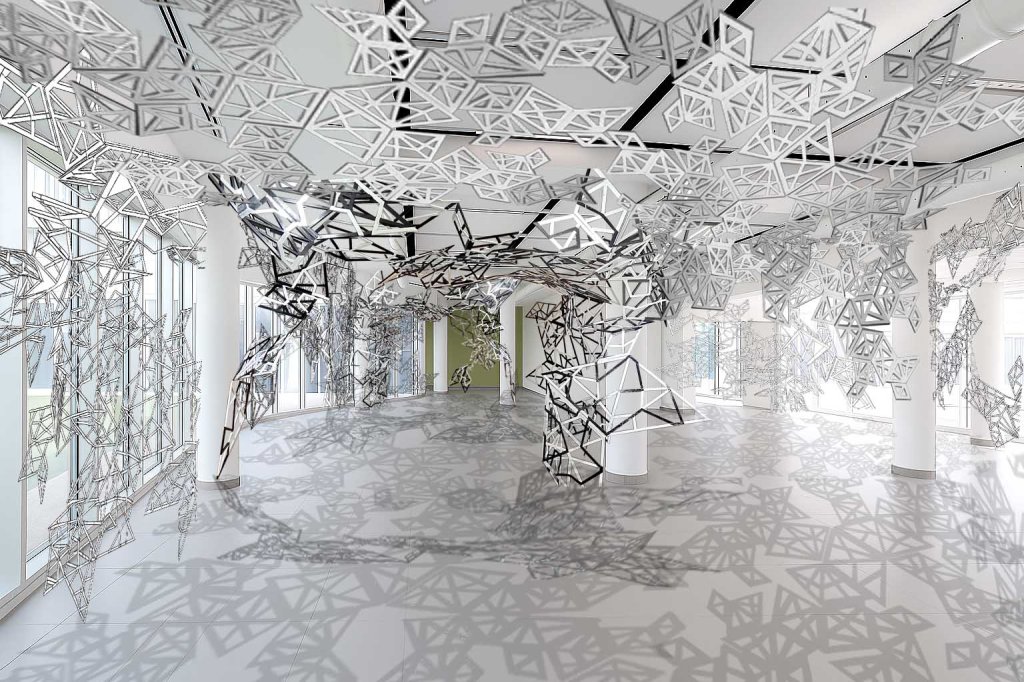
In questa prospettiva, MatriceMater è insieme nucleo, codice e attivazione.
È la matrice madre del sistema.
È il genotipo da cui emergono i fenotipi della forma.
È il principio attraverso cui la struttura attraversa spazio, materia e trasformazione senza perdere identità, perché la sua identità non risiede nella fissità dell’immagine, ma nella continuità della legge che la genera.
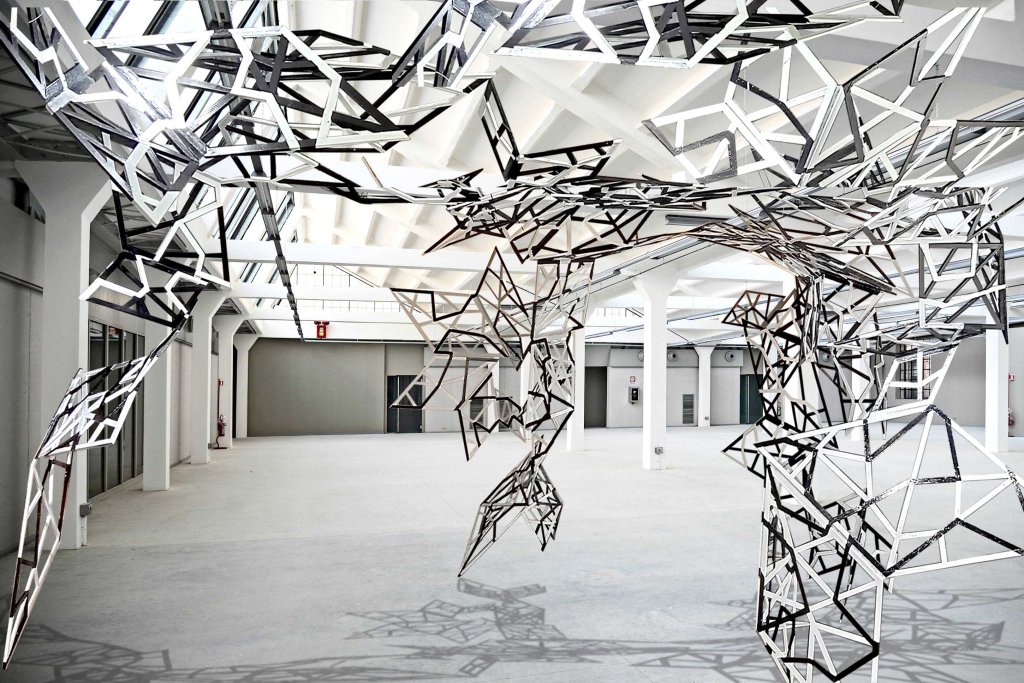
MatriceMater. Primary Code and Genetic-Structural Fractal
MatriceMater is not one form among others, nor a mere compositional motif.
It is the originating code of the entire system: the mother matrix from which works, installations, ramifications, and subsequent emergences of the research are generated.
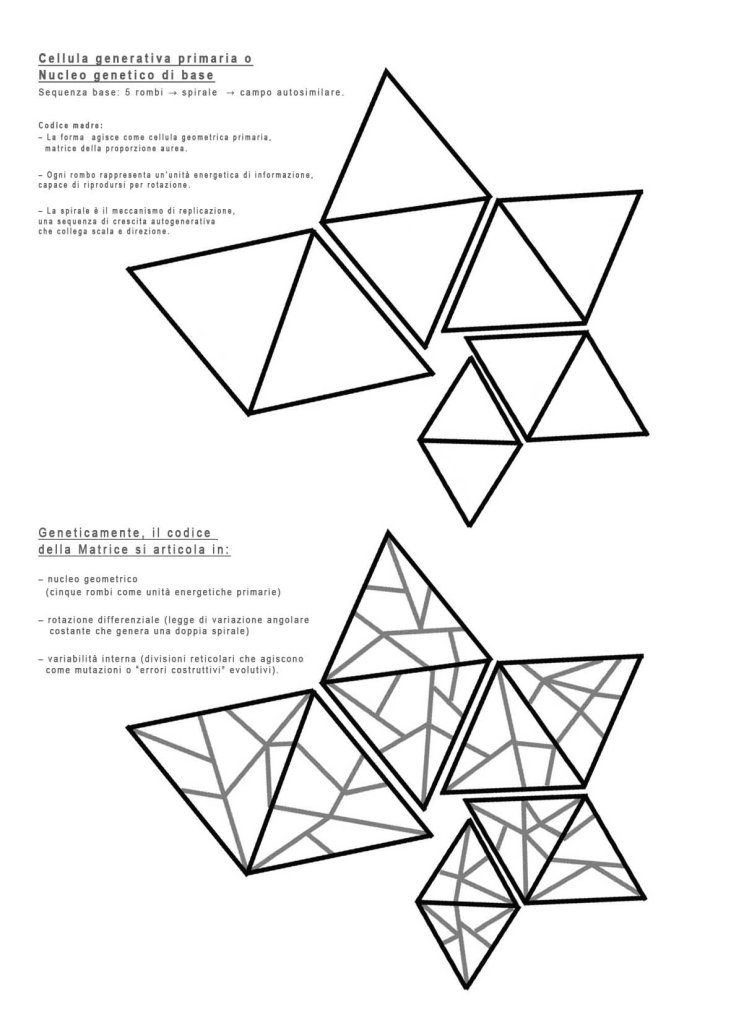
Its origin lies in a primary genetic nucleus composed of five rhombuses arranged in an asymmetrical radial structure, traversed by a constant yet irregular rotation. What this nucleus contains is not a completed figure, but a law. Not an image to be repeated, but an inner direction of growth.
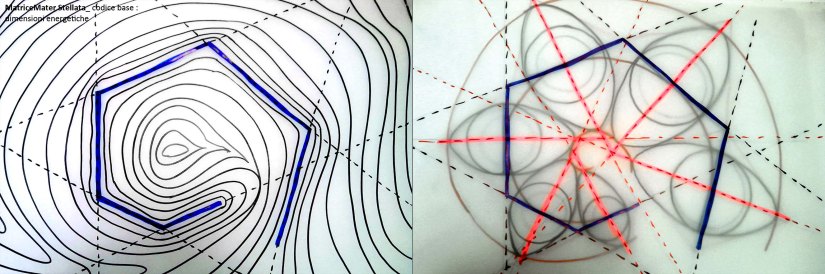
Within this direction, the temporal dimension is already inscribed: the code does not merely organise form, but orients its becoming. Time does not intervene as an external measure, but as an active principle of emergence, because it is through its unfolding that the structure acquires tension, relation, and the possibility of space. MatriceMater begins here: as a geometric genotype, as a source cell, as a principle of organisation capable of holding within itself proportion, deviation, tendency, and development.
For this reason, MatriceMater should not be read as a module, but as a generative organism.
Its behaviour does not coincide with the mechanical replication of the identical. Each passage instead produces a differential continuity: form reproduces itself without copying itself, propagates without being reduced to seriality, and maintains its own law while transforming. What endures is not the fixity of appearance, but the coherence of the code.
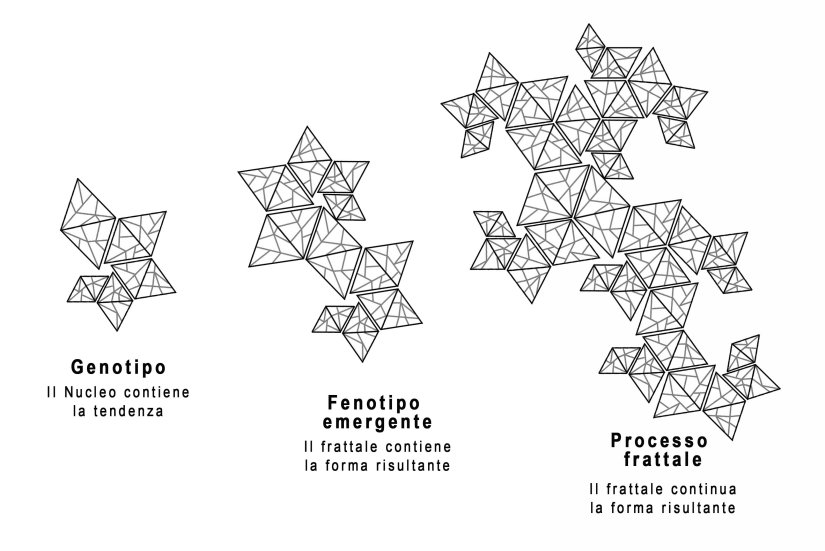
The double helix does not belong to the origin as an already given image.
It is a consequence of the process. It appears when the nucleus begins to reproduce itself, when the inner rule enters into propagation, when the structure generates daughter rhombuses, angular variations, shifts of scale, and new relational tensions. In this sense, MatriceMater is not born helical: it becomes helical. The nucleus contains the tendency; the resulting form emerges afterwards.
It is precisely within this gap between nucleus and manifestation that Time becomes decisive. Not as mere duration, but as the generative condition through which form passes through stages, accumulates differences, and constructs space. From this perspective, the fractal is not only a logic of propagation, but a temporal dynamic that renders the growth of the code visible within the real.
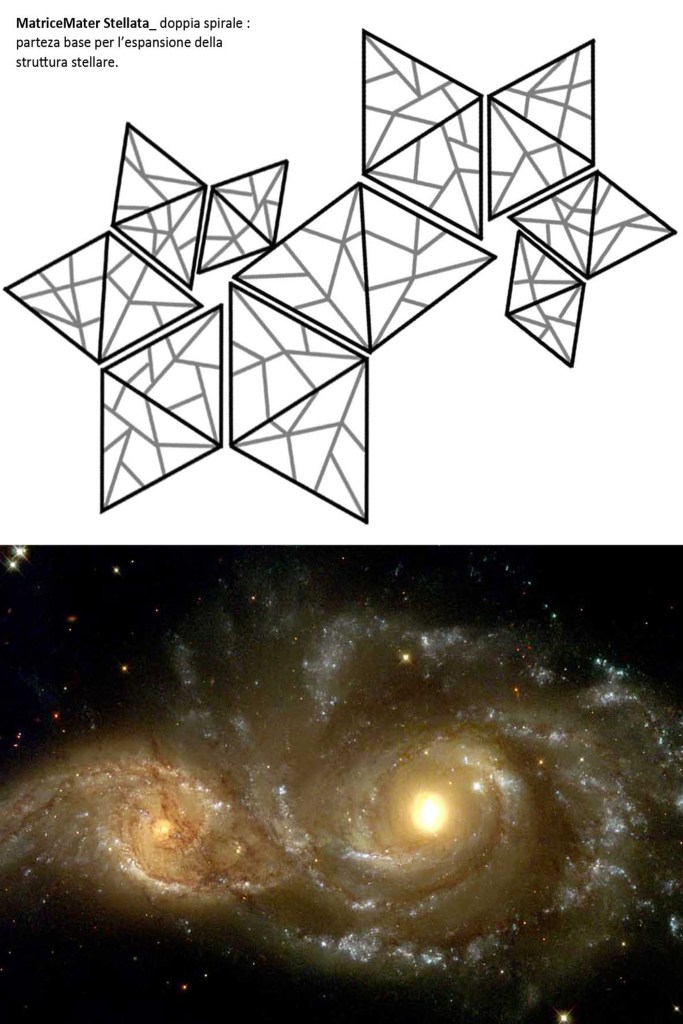
It is here that the research defines a new fractal field.
Not classical deterministic fractality, founded on the reiteration of a closed rule, but a genetic-structural fractal, not based on the modular repetition of the identical. Its self-similarity is neither rigid nor ornamental: it is an imperfect, evolutionary, vital self-similarity. Each generation preserves the principle while also differentiating it. Each development transmits the code, while exposing it to mutations, deviations, shifts in density, and rarefactions.
The internal network, too, does not perform a decorative function.
It acts as a system of constructive mutation. The inner lines introduce informational variations, increase complexity, and make the structure denser, more vital, and more capable of generating further configurations. Error is not a collapse of order: it is its evolutionary enzyme. Form grows precisely because it never fully coincides with its own replica.
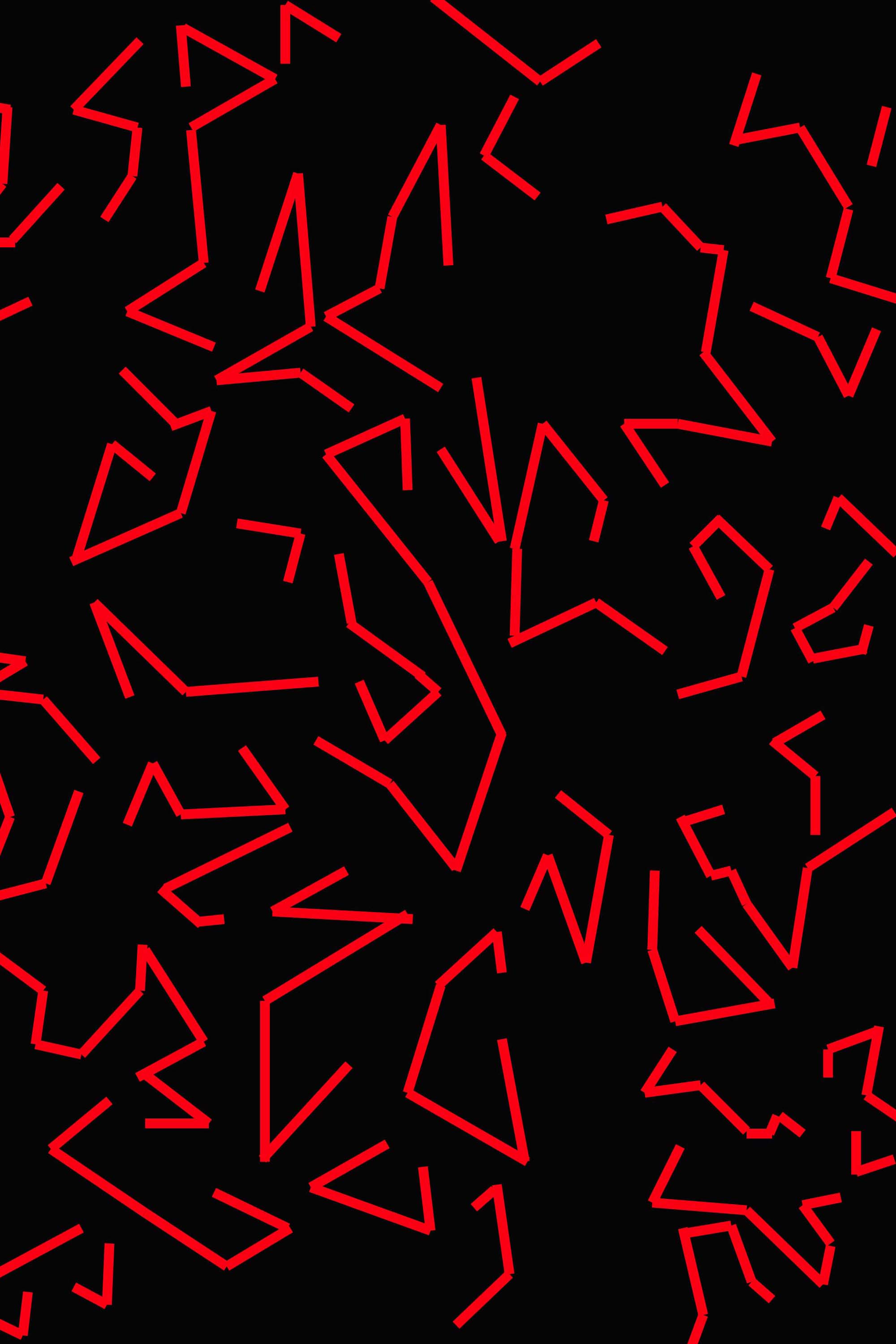
From this perspective, MatriceMater is the visible DNA of the research.
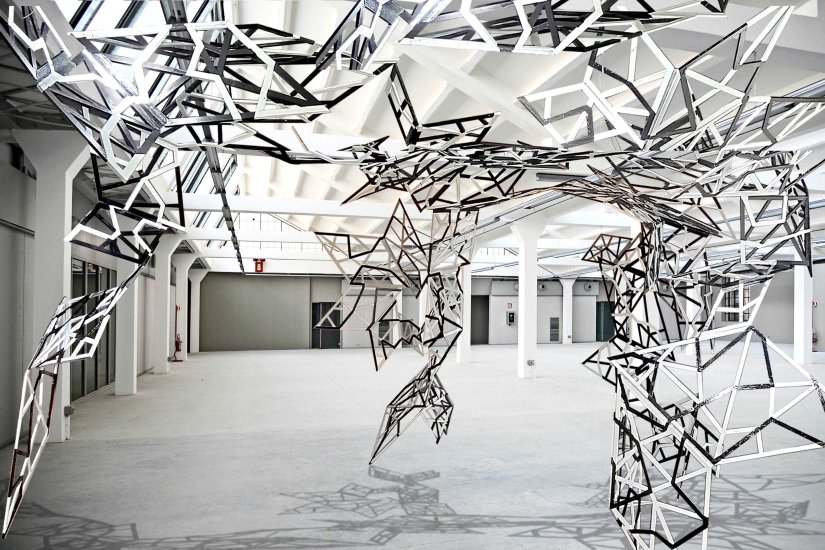
It does not merely represent an origin: it renders that origin operative. Everything that follows — environmental expansions, installational propagations, morphological filiations, three-dimensional emergences — does not arise alongside it, but from it. The works do not constitute separate episodes: they are active descendants of a single source code.
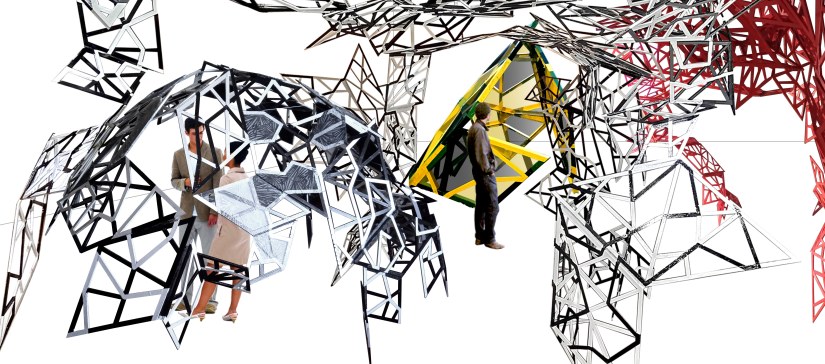
The originating sign therefore assumes a radical value.
It is not a simple logo, nor an emblem superimposed upon the research. It is its primary condensation. Here the sign does not illustrate the system: it safeguards its generative law. Visual identity, theoretical structure, and morphogenetic principle coincide.
MatriceMater thus asserts itself as a precise threshold of contemporary form: where geometry ceases to be descriptive and becomes genetic; where the fractal ceases to be a schema and becomes behaviour; where origin does not remain still, but continues to generate descent.
From this perspective, MatriceMater is at once nucleus, code, and activation.
It is the mother matrix of the system.
It is the genotype from which the phenotypes of form emerge.
It is the principle through which structure traverses space, matter, and transformation without losing identity, because its identity does not reside in the fixity of the image, but in the continuity of the law that generates it.
Ritornare alla soglia del sistema / Returning to the threshold of the system : https://pamelaferri.com/
Leggi l’approfondimento dedicato a MatriceMater come codice primario e geometria generativa / Read the full text on MatriceMater as primary code and generative geometry:
https://pamelaferri.com/matricemater-codice-primario-rimodellamento-e-geometria-generativa/

